Best Sugar Substitutes in India: Natural Sweetener Options for People with Diabetes
Medically Reviewed & Fact-Checked by Ayurvedic Physicians
This clinical article is authored and reviewed by qualified Ayurvedic doctors (BAMS) conforming to authentic Ayurvedic principles and classical references from the Charaka Samhita. Educational content only; not a replacement for individual medical diagnosis.
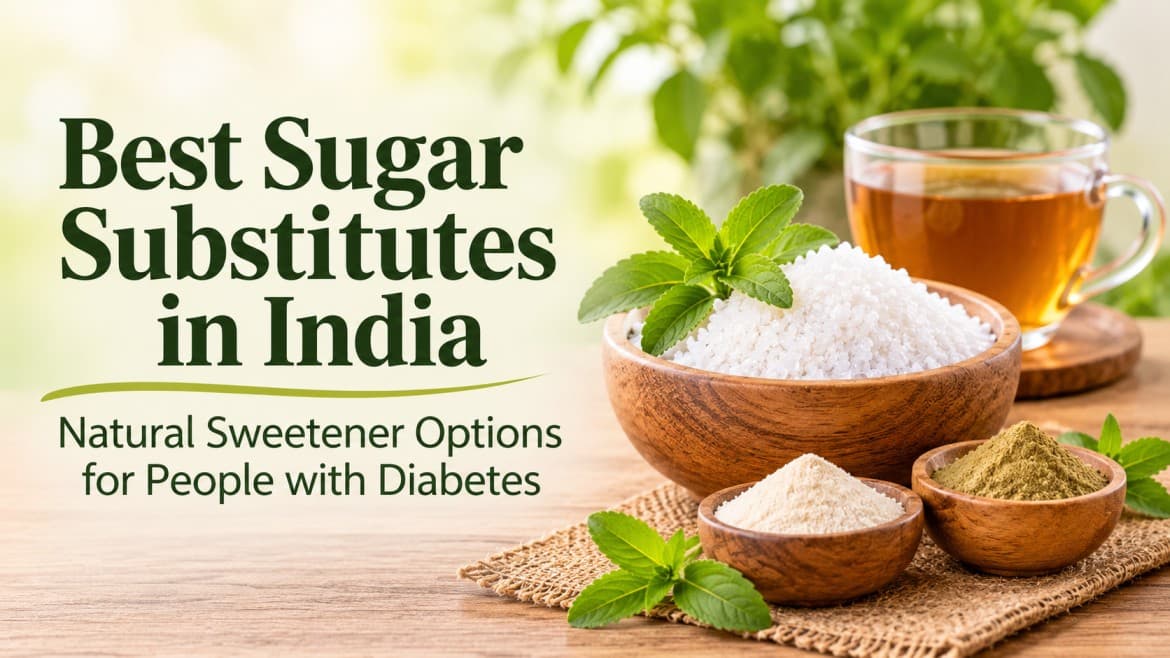
Sugar is a common part of everyday Indian food, from morning tea and coffee to homemade sweets and desserts. However, people managing diabetes often need to pay closer attention to their sugar intake and the ingredients they use in their daily diet.
This has increased interest in sugar substitutes in India, especially natural sweeteners that can be used in everyday food and beverages.
But which sugar substitutes are worth considering? Are natural sweeteners always better than regular sugar? And how can people with diabetes choose a suitable alternative?
In this guide, we explore different sugar substitute options, their characteristics, uses and important considerations to help you make an informed choice.
Why Are People Looking for Sugar Substitutes?
Regular table sugar contains sucrose, which provides carbohydrates and can raise blood glucose levels. For people managing diabetes, monitoring carbohydrate intake is an important part of daily food planning.
Some common reasons people explore sugar alternatives include:
Reducing added sugar consumption.
Managing daily carbohydrate intake.
Finding alternatives for tea, coffee and homemade desserts.
Exploring different sweetening ingredients.
Making informed food choices as part of a balanced diet.
However, replacing regular sugar does not automatically make a food suitable for people with diabetes. The overall ingredients, portion size and nutritional composition also matter.
What Are the Best Sugar Substitutes in India?
There are several types of sugar substitutes available in India. They differ in their sources, sweetness, nutritional properties and suitability for different recipes.
Let's understand some commonly used options.
1. Stevia
Stevia is a plant-derived sweetener obtained from the leaves of the Stevia rebaudiana plant. Its sweet compounds, called steviol glycosides, provide sweetness with very little or no calories.
Key characteristics:
Provides sweetness without the same carbohydrate contribution as regular sugar.
Has minimal impact on blood glucose when used as purified steviol glycosides.
Available in powder, liquid and tablet forms.
Can be used in beverages and selected recipes.
Stevia is an option for people looking to reduce added sugar, although its taste and sweetness intensity may differ from regular sugar.
2. Monk Fruit Sweetener
Monk fruit sweetener is made using compounds called mogrosides, extracted from monk fruit.
Key characteristics:
Provides sweetness with little or no calories in purified forms.
Has minimal impact on blood glucose in its pure form.
Available in powdered and blended formulations.
Commonly used in beverages and desserts.
Always check the ingredient label because some commercial monk fruit products contain additional sweeteners or bulking ingredients.
3. Erythritol
Erythritol is a sugar alcohol used as a sugar substitute in many food products.
Key characteristics:
Provides fewer calories than regular sugar.
Has a relatively low effect on blood glucose.
Offers a taste and texture similar to sugar.
Can be used in baking and beverages.
Consuming large quantities of sugar alcohols may cause digestive discomfort in some people.
4. Xylitol
Xylitol is another sugar alcohol found in certain plants and produced commercially for use as a sweetener.
Key characteristics:
Provides fewer calories than regular sugar.
Has a lower glycemic impact than table sugar.
Used in chewing gum, confectionery and selected recipes.
Large amounts may cause bloating or digestive discomfort. Xylitol is also highly toxic to dogs and must be kept away from pets.
5. Allulose
Allulose is a low-calorie sugar alternative found naturally in small amounts in certain foods and also produced commercially.
Key characteristics:
Provides fewer calories than regular sugar.
Has a minimal effect on blood glucose in most people.
Can be used in selected beverages and recipes.
Availability and regulatory status may vary by country.
Check local product labelling and applicable food regulations before choosing it.
6. Natural Sweetener Blends
Some commercially available natural sweeteners combine different ingredients to provide balanced sweetness and make everyday use easier.
Their nutritional properties depend on the actual ingredients and proportions used.
Before purchasing, check:
The complete ingredient list.
Total carbohydrates per serving.
Added sugars, if any.
Calories per serving.
Recommended usage instructions.
Natural Sweetener vs Regular Sugar: What Is the Difference?
| Comparison | Regular Sugar | Non-Nutritive Sweeteners |
|---|---|---|
| Source | Sugarcane or sugar beet | Plant-derived or manufactured |
| Calories | Around 4 kcal per gram | Often very low or zero |
| Carbohydrates | Approximately 4 g per gram | Depends on formulation |
| Blood glucose response | Raises blood glucose | Generally minimal for pure stevia and monk fruit extracts |
| Common uses | Cooking, baking and beverages | Beverages and selected recipes |
Important: Not all natural sweeteners have the same nutritional properties. Honey, jaggery and coconut sugar are still sources of sugar and carbohydrates. They should not automatically be considered diabetes-friendly alternatives.
How to Choose the Right Sugar Substitute for Diabetes?
Choosing a sugar alternative requires more than looking at the word natural on the packaging.
Consider the following points before purchasing:
1. Check the Ingredients
Look for clearly listed ingredients and understand what makes the product sweet.
2. Compare Carbohydrate Content
Read the nutrition label and check total carbohydrates per serving, not just the sugar content.
3. Understand the Sweetener Type
Different sweeteners behave differently in cooking, baking and beverages. Select one according to your requirements.
4. Check Serving Recommendations
Use the recommended serving size mentioned on the product packaging.
5. Consider Your Dietary Needs
People with diabetes may have different nutritional requirements. A qualified healthcare professional or registered dietitian can help identify an appropriate option.
How Can You Use Sugar Substitutes in Everyday Indian Food?
Sugar substitutes can be incorporated into several everyday preparations, depending on the ingredient and its cooking properties.
Some common applications include:
Tea and coffee: Use a suitable sweetener according to its recommended serving size.
Homemade desserts: Choose a sweetener specifically suitable for the recipe.
Smoothies: Add an appropriate quantity if additional sweetness is needed.
Breakfast preparations: Use a suitable sweetener in selected porridge and breakfast recipes.
Homemade beverages: Explore alternatives to regular sugar in lemon drinks and other preparations.
Remember that using a sugar substitute does not automatically make a recipe low-calorie or suitable for diabetes. Other ingredients also contribute carbohydrates and calories.
For everyday food choices, you can also explore Madhumukthi Diabetes Rice and Madhumukthi Joha Rice as alternative rice options.
Explore Madhumukthi Natural Sweetener
For people exploring alternatives to regular sugar, Madhumukthi offers its own Low Glycemic Natural Sweetener.
It is designed for use in everyday beverages and selected food preparations, including tea, coffee, sweets and baking.
Before choosing any sweetener, review its ingredients, nutritional information and recommended serving instructions to understand whether it fits your dietary requirements.
Explore the product here:
Madhumukthi Low Glycemic Natural Sweetener – 150g
Frequently Asked Questions About Sugar Substitutes
1. What is the best sugar substitute for diabetics in India?
Stevia, monk fruit sweetener and erythritol are among the commonly considered alternatives. The right choice depends on the ingredients, carbohydrate content, serving size and individual dietary requirements.
2. Is natural sweetener better than regular sugar?
Some natural-origin sweeteners, such as purified stevia extracts, provide sweetness with very little or no calories. However, natural-origin products are not automatically healthier. Their nutritional composition matters.
3. Can people with diabetes use stevia daily?
Purified steviol glycosides are generally considered safe within established acceptable daily intake limits. Individuals should follow product instructions and consult their healthcare professional when needed.
4. Is jaggery a good alternative to sugar for diabetes?
Jaggery contains sugars and carbohydrates and can raise blood glucose levels. It should not be considered a sugar-free alternative.
5. Does monk fruit sweetener increase blood sugar?
Pure monk fruit extracts generally have minimal impact on blood glucose. However, blended products may contain other ingredients, so checking the nutrition label is important.
6. Can sugar substitutes be used in tea and coffee?
Yes. Several sugar substitutes can be used in tea and coffee. The amount required depends on the sweetener's sweetness intensity and product instructions.
7. What should I check before buying a sugar substitute?
Check its ingredients, total carbohydrates, calories, serving size and nutritional information. Avoid relying only on marketing claims such as natural or sugar-free.
Conclusion
Choosing a suitable sugar substitute can be one part of making informed everyday food choices. Options such as stevia, monk fruit and erythritol offer different ways to reduce reliance on regular sugar.
However, every sweetener has its own characteristics, and the best option depends on individual dietary needs and product composition.
If you are exploring alternatives to regular sugar, understand the ingredients, compare nutritional labels and choose products that fit your lifestyle and dietary requirements.
Editor User
BAMS, MD (Ayurveda)Senior Ayurvedic Clinical Specialist with over 18 years of experience in metabolic disorders, Prameha (Madhumeha) management, and herbal phytotherapy.
Ready to Naturalize Your Blood Sugar Levels?
Explore our FSSAI-certified Madhumukthi products crafted with pure natural herbs and low GI grains.
Shop All Products