
Black Turmeric Benefits: Traditional Uses, Properties and Applications
Medically Reviewed & Fact-Checked by Ayurvedic Physicians
This clinical article is authored and reviewed by qualified Ayurvedic doctors (BAMS) conforming to authentic Ayurvedic principles and classical references from the Charaka Samhita. Educational content only; not a replacement for individual medical diagnosis.
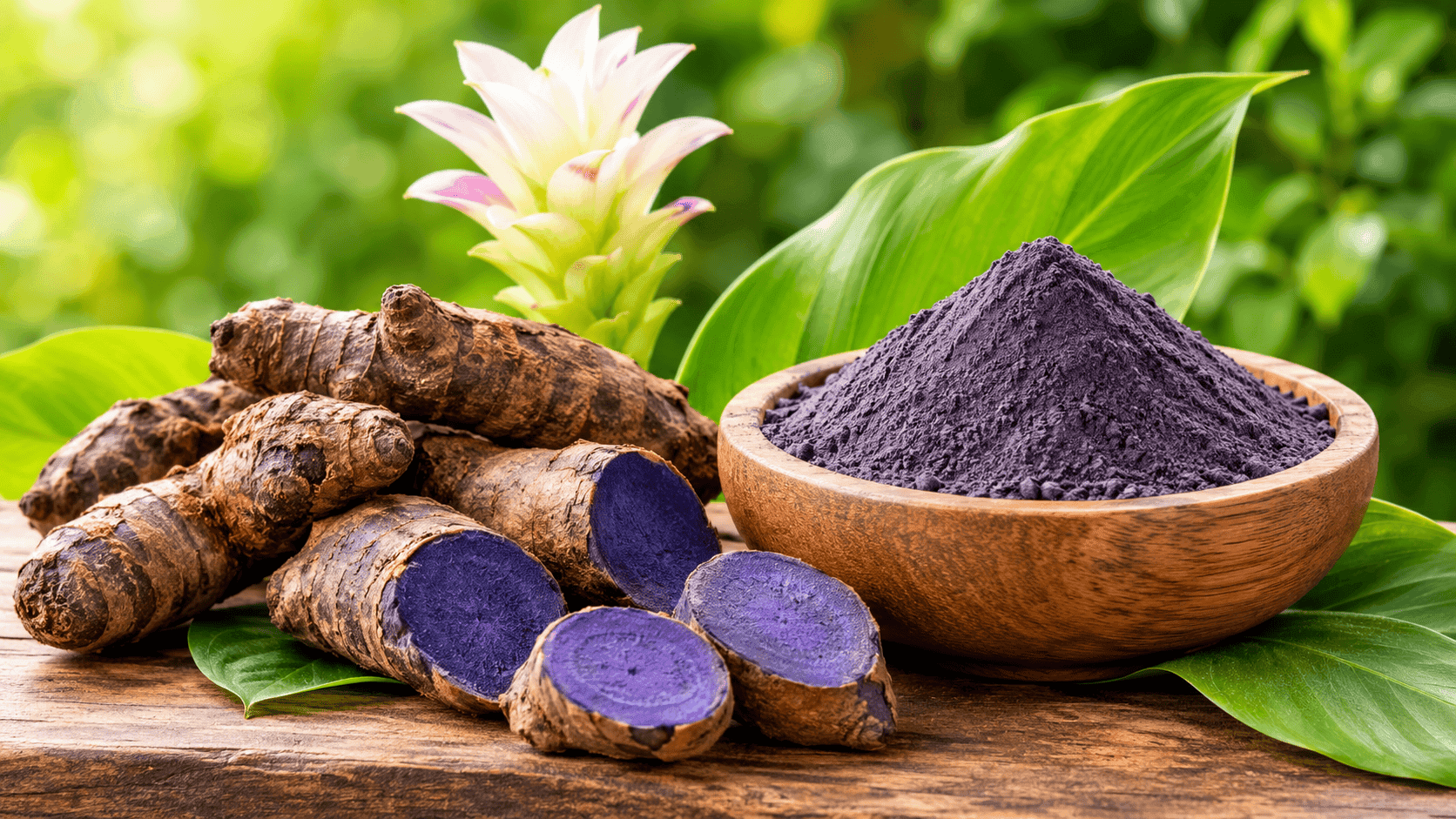
Black turmeric, also known as Kali Haldi, is a unique variety of turmeric traditionally used in Indian herbal practices. Unlike regular yellow turmeric, black turmeric has a distinctive bluish-purple to dark-coloured interior and a characteristic aroma. Its botanical name is Curcuma caesia, and it belongs to the ginger family, Zingiberaceae.
Black turmeric has attracted attention because of its traditional applications, naturally occurring plant compounds and distinctive botanical properties. Today, black turmeric powder is explored by people interested in traditional herbs, natural ingredients and plant-based wellness products.
Understanding black turmeric benefits, traditional uses, properties and applications can help consumers make informed decisions when choosing herbal ingredients.
What Is Black Turmeric?
Black turmeric (Curcuma caesia) is a perennial herb traditionally found in India and other parts of South Asia. It is recognised by its dark-coloured rhizome, which has a distinctive aromatic smell.
The rhizome is the underground stem of the plant. It is commonly cleaned, dried and processed into black turmeric powder for traditional herbal applications.
Unlike regular turmeric (Curcuma longa), which has a yellow-orange colour, black turmeric has a bluish-purple to dark interior and a different phytochemical composition.
Black turmeric is also known by several regional names, including Kali Haldi and Black Zedoary.
1. Traditional Uses of Black Turmeric
Black turmeric has been used in various traditional practices for generations. Its applications vary across communities and regional herbal systems.
Some traditional applications include:
Traditional Herbal Preparations
Black turmeric has historically been included as an ingredient in selected regional herbal preparations. Its rhizome is processed into powder for use in traditional botanical formulations.
Traditional External Applications
In some traditional practices, black turmeric has been used in external herbal preparations. However, its suitability for topical application depends on the preparation and individual skin sensitivity.
Cultural and Traditional Practices
Black turmeric has cultural significance in certain Indian communities. It has traditionally been associated with specific regional rituals and practices.
Botanical and Herbal Research
Black turmeric is also studied for its naturally occurring plant compounds and potential biological activities.
These applications reflect traditional knowledge and should not be interpreted as scientifically established treatments for medical conditions.
2. Important Properties of Black Turmeric
Black turmeric contains several naturally occurring phytochemicals that contribute to its distinctive botanical characteristics.
Naturally Occurring Plant Compounds
Black turmeric contains various bioactive compounds, including volatile oils and other phytochemicals. Its chemical composition differs from that of regular yellow turmeric.
Aromatic Properties
One of the distinctive characteristics of black turmeric is its strong and unusual aroma. Naturally occurring volatile compounds contribute to its characteristic smell.
Antioxidant Activity
Certain compounds found in black turmeric have been investigated for antioxidant activity in laboratory studies. However, laboratory findings do not establish specific health benefits in humans.
Unique Botanical Composition
Black turmeric has a different chemical profile from common turmeric. Its composition can vary depending on growing conditions, geographical origin and processing methods.
3. Black Turmeric vs Regular Turmeric: What Is the Difference?
Black turmeric and regular turmeric belong to the same botanical family but have different physical characteristics and traditional applications.
| Feature | Black Turmeric | Regular Turmeric |
|---|---|---|
| Botanical name | Curcuma caesia | Curcuma longa |
| Common name | Kali Haldi | Haldi |
| Internal colour | Bluish-purple to dark | Yellow to orange |
| Aroma | Distinctive and strong | Earthy and characteristic |
| Rhizome appearance | Dark-coloured interior | Yellow-orange interior |
| Traditional applications | Regional herbal practices | Cooking and traditional preparations |
| Powder appearance | Darker shade | Yellow-orange |
Both varieties have their own unique characteristics. Black turmeric should not automatically be considered a replacement for regular turmeric.
4. Different Applications of Black Turmeric Powder
Black turmeric is traditionally processed into powder because it is convenient to store, handle and incorporate into selected herbal preparations.
Some common areas of application include:
Herbal Preparations
Black turmeric powder is used as a botanical ingredient in certain traditional herbal formulations.
Traditional Personal Care
Black turmeric has a history of external use in some regional practices. Before using it on the skin, check the product instructions and perform a patch test.
Botanical Research
Researchers study black turmeric to understand its phytochemical composition and potential biological activities.
Traditional Wellness Practices
Black turmeric continues to be recognised as an ingredient in certain traditional and cultural wellness practices.
It is important to distinguish traditional applications from proven medical benefits. Black turmeric should not replace prescribed medication or professional medical advice.
5. How Is Black Turmeric Powder Prepared?
Black turmeric powder is generally produced through several processing stages to make the rhizome easier to store and use.
Step 1: Rhizome Selection
Suitable black turmeric rhizomes are selected based on their quality and condition.
Step 2: Cleaning
The selected rhizomes are cleaned to remove soil, dirt and other unwanted materials.
Step 3: Drying
The cleaned rhizomes are dried under appropriate conditions to reduce their moisture content.
Step 4: Grinding
Once sufficiently dried, the rhizomes are ground into powder.
Step 5: Packaging and Storage
The prepared powder is packed in suitable containers to protect it from moisture, contamination, and environmental exposure.
Proper processing and storage help maintain the quality of herbal powders.
6. What Should You Check Before Buying Black Turmeric Powder?
Choosing a suitable herbal powder requires attention to its ingredients, quality and product information.
Here are some important factors to consider:
Botanical identification: Check whether the product clearly identifies the ingredient as Curcuma caesia.
Ingredient purity: Look for clear ingredient information and details about additional ingredients, if any.
Processing quality: Understand the manufacturing and processing practices used.
Packaging: Choose properly sealed packaging that protects the powder from moisture.
Manufacturer details: Check the manufacturer's information, batch number and applicable quality certifications.
Usage instructions: Follow the manufacturer's recommended directions and precautions.
Buying from a brand that provides clear product information can help consumers make more informed choices.
7. Explore Shyamala Black Turmeric Powder by Madhumukthi
For people interested in traditional botanical ingredients, Madhumukthi offers Shyamala Black Turmeric Powder as part of its herbal product range.
Black turmeric is recognised for its distinctive appearance, characteristic aroma and traditional applications. Shyamala Black Turmeric Powder provides an option for consumers exploring this unique herbal ingredient.
Before choosing any herbal powder, understand its ingredients, products specifications, storage requirements and recommended usage.
Explore Shyamala Black Turmeric Powder by Madhumukthi to learn more about the product.
8. How to Store Black Turmeric Powder Properly
Proper storage is important for maintaining the quality of black turmeric powder.
Follow these simple storage recommendations:
Keep the powder in an airtight container.
Store it in a cool and dry place.
Avoid direct sunlight and excessive heat.
Keep the container away from moisture.
Always use a clean and dry spoon.
Follow the storage instructions printed on the product packaging.
Correct storage practices help protect herbal powders from moisture and contamination.
Frequently Asked Questions About Black Turmeric
1. What is black turmeric called in India?
Black turmeric is commonly known as Kali Haldi in India. Its botanical name is Curcuma caesia. It is recognised by its dark-coloured rhizome and distinctive aroma.
2. What are the traditional benefits of black turmeric?
Black turmeric has traditionally been used in regional herbal preparations, external applications and cultural practices. Specific medical benefits have not been established through sufficient human clinical research.
3. What is the difference between black turmeric and regular turmeric?
Black turmeric has a bluish-purple to dark interior, while regular turmeric has a yellow-orange interior. They also differ in their phytochemical composition, aroma and traditional applications.
4. What is black turmeric powder used for?
Black turmeric powder is traditionally used as an ingredient in selected herbal preparations and regional practices. It is also studied for its botanical composition and naturally occurring compounds.
5. Is black turmeric the same as Kali Haldi?
Yes. Kali Haldi is a commonly used Indian name for black turmeric, botanically identified as Curcuma caesia.
6. Can black turmeric powder be used for skincare?
Black turmeric has a history of traditional external use. However, scientific evidence supporting specific skincare benefits in humans is limited. Always check the product instructions and perform a patch test before topical application.
7. Does black turmeric contain curcumin?
Black turmeric has a different phytochemical composition from regular yellow turmeric. It should not be assumed to have the same curcumin concentration as Curcuma longa.
8. How should black turmeric powder be stored?
Store black turmeric powder in an airtight container in a cool, dry place, away from direct sunlight and moisture. Follow the manufacturer's storage instructions.
9. Can black turmeric replace regular turmeric in cooking?
Black turmeric and regular turmeric have different aromas, compositions and traditional applications. They are not necessarily interchangeable in cooking.
10. Where can I find black turmeric powder?
You can explore Shyamala Black Turmeric Powder through the Madhumukthi website and review its product information before purchasing.
Conclusion
Black turmeric is a distinctive botanical ingredient with a long history in traditional Indian practices. Its unique appearance, aromatic properties and naturally occurring plant compounds make it an interesting subject for botanical research and traditional herbal applications.
Understanding black turmeric benefits, traditional uses, properties, preparation methods and differences from regular turmeric can help consumers make informed decisions when exploring herbal products.
If you are interested in traditional herbal ingredients, explore Shyamala Black Turmeric Powder by Madhumukthi and learn more about this unique botanical product.
Editor User
BAMS, MD (Ayurveda)Senior Ayurvedic Clinical Specialist with over 18 years of experience in metabolic disorders, Prameha (Madhumeha) management, and herbal phytotherapy.
Ready to Naturalize Your Blood Sugar Levels?
Explore our FSSAI-certified Madhumukthi products crafted with pure natural herbs and low GI grains.
Shop All Products