Buckwheat Flour vs Wheat Flour for Diabetes: Which Is Better?
Medically Reviewed & Fact-Checked by Ayurvedic Physicians
This clinical article is authored and reviewed by qualified Ayurvedic doctors (BAMS) conforming to authentic Ayurvedic principles and classical references from the Charaka Samhita. Educational content only; not a replacement for individual medical diagnosis.
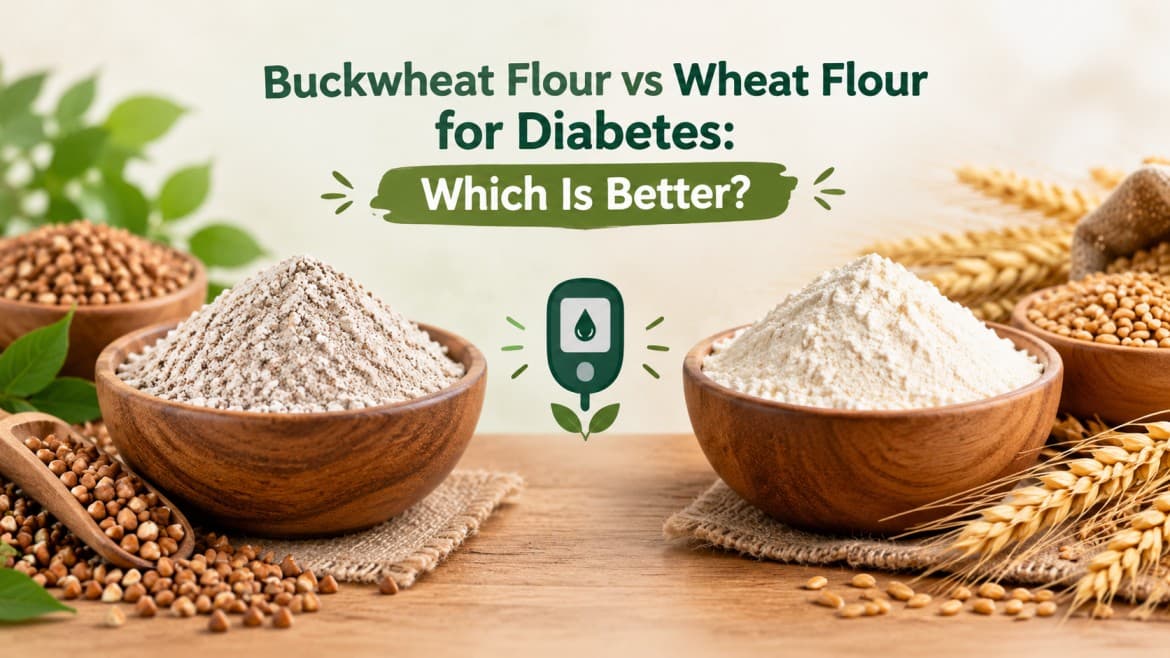
Choosing the right flour can be an important part of planning a balanced diet for people managing diabetes. Wheat flour is commonly used for chapati, roti, bread and other everyday foods, while buckwheat flour is becoming popular among people looking for nutritious alternatives.
But is buckwheat flour better than wheat flour for diabetes? The answer depends on the type of flour, portion size, preparation method and the overall meal.
In this article, we compare buckwheat flour vs wheat flour for diabetes, including their nutritional characteristics, potential effect on blood sugar, and practical ways to include them in a balanced diet.
Buckwheat Flour vs Wheat Flour: Quick Comparison
| Feature | Buckwheat Flour | Wheat Flour |
|---|---|---|
| Source | Buckwheat seeds | Wheat grain |
| Naturally gluten-free | Yes | No |
| Fibre | Provides dietary fibre | Provides dietary fibre, depending on flour type |
| Protein | Provides plant protein | Provides protein |
| Use | Roti, pancakes, dosa, baked foods | Roti, chapati, bread and baked foods |
| Diabetes-friendly consideration | Can fit into a balanced, high-fibre diet | Whole-wheat varieties can also fit into a balanced diet |
The nutritional value can vary depending on the processing and brand, so it is important to check the products label when comparing different flours.
What Is Buckwheat Flour?
Buckwheat flour is made from ground buckwheat seeds. Despite its name, buckwheat is not a type of wheat and is naturally gluten-free.
It is commonly used in foods such as rotis, pancakes, porridge, dosa-style preparations and baked recipes.
Buckwheat provides dietary fibre and plant-based nutrients, making it an option for people who want to add variety to their diet.
For people managing diabetes, the important consideration is not simply whether a food is labelled “healthy.” The amount consumed, the complete meal and the carbohydrate content all matter.
What Is Wheat Flour?
Wheat flour is made by grinding wheat grains and is widely used in Indian diets.
Whole-wheat flour contains more of the grain components than refined flour and generally provides more fibre and nutrients than refined wheat flour.
For someone with diabetes, choosing whole-wheat flour instead of highly refined flour may be a more nutritious option. However, portion size and the total carbohydrate content of the meal still need to be considered.
Buckwheat Flour vs Wheat Flour for Diabetes
So, which is better?
There is no single flour that is automatically best for every person with diabetes. However, buckwheat flour can be a useful alternative when someone wants to increase dietary variety and include a naturally gluten-free, fibre-containing grain alternative.
Whole-wheat flour can also be part of a balanced diabetes-friendly diet.
The better choice depends on individual nutritional needs, portion sizes, preparation methods and what the flour is eaten with.
Is Buckwheat Flour Good for Diabetes?
Buckwheat flour can be included in a diabetes-friendly diet when consumed in appropriate portions.
Its fibre content can contribute to a balanced meal, while replacing refined flour with less processed, nutrient-dense options can be helpful for overall dietary quality.
However, buckwheat flour still contains carbohydrates. It should therefore not be treated as a “free food” or assumed to have no effect on blood glucose.
A practical approach is to combine an appropriate portion of buckwheat-based food with protein, vegetables and healthy fats.
Is Whole-Wheat Flour Good for Diabetes?
Whole-wheat flour can also be included in a diabetes-friendly eating pattern.
Compared with refined flour, whole-wheat flour generally retains more of the grain and provides dietary fibre.
For example, a whole-wheat chapati paired with vegetables and a protein source such as dal, paneer, eggs or curd can form a more balanced meal than eating a large portion of refined-flour foods alone.
Which Has a Lower Glycemic Impact?
The glycemic response of a meal depends on several factors, including:
- Type of flour
- Amount consumed
- Degree of processing
- Cooking method
- Fibre content
- What other foods are eaten with it
- Individual response to carbohydrates
Therefore, it is not accurate to assume that every buckwheat preparation will produce a lower blood sugar response than every wheat preparation.
A balanced meal and sensible portion size remain important.
Buckwheat Flour for Weight-Conscious Diabetes Diets
Maintaining a healthy weight can be an important part of diabetes management for many people.
Buckwheat flour can provide fibre and plant-based nutrients and may add variety to meals. However, simply changing flour does not automatically make a meal suitable for weight management.
Calories, portion size, cooking ingredients and the overall diet all matter.
For example, a buckwheat roti cooked with large amounts of oil or ghee can still contribute significant calories.
How to Use Buckwheat Flour in a Diabetes-Friendly Diet
Buckwheat flour can be used in several everyday recipes.
1. Buckwheat Roti
Use buckwheat flour to prepare a simple roti and pair it with vegetables and a protein-rich side dish.
2. Buckwheat Dosa
Buckwheat flour can be incorporated into dosa-style recipes along with suitable vegetables or other nutritious ingredients.
3. Buckwheat Pancakes
For a healthier option, prepare pancakes using buckwheat flour and avoid adding excessive sugar.
4. Mixed-Flour Recipes
Buckwheat flour can also be combined with other suitable whole-food ingredients to create different textures and flavours.
The goal is to make the overall meal balanced rather than relying on one ingredient alone.
Buckwheat Flour vs Wheat Flour: Which Should You Choose?
If you are choosing between buckwheat flour and wheat flour, consider your dietary requirements and how you normally consume flour-based foods.
Buckwheat flour may be a useful choice if:
- You want a naturally gluten-free flour.
- You want to add more variety to your diet.
- You want to include a fibre-containing alternative.
- You enjoy experimenting with different healthy recipes.
Whole-wheat flour may be a suitable choice if:
- You regularly eat chapati or roti.
- You prefer traditional wheat-based meals.
- You tolerate gluten and wheat well.
- You want a convenient whole-grain flour for everyday cooking.
For people with diabetes, neither option should be viewed as a replacement for medical treatment. A personalised diet plan from a qualified healthcare professional or dietitian can help determine suitable portions and food choices.
Tips for Choosing Flour When You Have Diabetes
When selecting flour, don't focus only on the name of the ingredient. Consider the complete nutritional profile.
Check the fibre content
Higher-fibre foods can help contribute to a balanced eating pattern and may support better satiety.
Watch portion sizes
Even nutritious foods contain calories and carbohydrates. Portion control remains important.
Avoid excessive refined ingredients
Choose less processed options when appropriate and limit recipes containing large amounts of added sugar.
Pair carbohydrates with protein and vegetables
Combining flour-based foods with vegetables and protein can make the overall meal more balanced.
Monitor your individual response
People can respond differently to the same foods. If you monitor blood glucose, your readings can help you and your healthcare professional understand how particular meals affect you.
Frequently Asked Questions
Is buckwheat flour better than wheat flour for diabetes?
Buckwheat flour can be a nutritious alternative to wheat flour and can fit into a diabetes-friendly diet. However, it is not automatically better for everyone. Portion size, preparation and the overall meal are important.
Can diabetic patients eat buckwheat flour?
Yes, buckwheat flour can be included in a balanced diet for people with diabetes. Since it contains carbohydrates, appropriate portions are important.
Is buckwheat flour low GI?
The glycemic response can vary depending on the flour, preparation and meal composition. It is better not to assume that every buckwheat-based food has the same glycemic effect.
Can I replace wheat flour with buckwheat flour?
Buckwheat flour can be used as an alternative in many recipes, but its texture and cooking properties differ from wheat flour. Some recipes may require adjustments or blending with other flours.
Is buckwheat flour gluten-free?
Yes. Buckwheat itself is naturally gluten-free. People with celiac disease or gluten sensitivity should still check packaging and processing information to avoid cross-contamination.
What is the best flour for diabetes?
There is no single best flour for everyone with diabetes. Buckwheat flour and whole-wheat flour can both be incorporated into a balanced diet when portions and overall carbohydrate intake are considered.
Conclusion
Buckwheat flour vs wheat flour for diabetes is not simply a question of choosing one flour as universally “better.”
Buckwheat flour offers a naturally gluten-free option with dietary fibre and plant-based nutrients, while whole-wheat flour can also provide fibre and fit well into traditional meals.
The most important factors are portion size, preparation method, meal composition and individual nutritional needs.
If you are looking for a nutritious flour alternative, Madhumukthi Buckwheat Flour can be considered as part of a balanced, diabetes-conscious eating pattern. For personalised dietary advice, consult a qualified healthcare professional or registered dietitian.
Editor User
BAMS, MD (Ayurveda)Senior Ayurvedic Clinical Specialist with over 18 years of experience in metabolic disorders, Prameha (Madhumeha) management, and herbal phytotherapy.
Ready to Naturalize Your Blood Sugar Levels?
Explore our FSSAI-certified Madhumukthi products crafted with pure natural herbs and low GI grains.
Shop All Products