
Kasturi Turmeric vs Regular Turmeric: Differences in Uses and Skin Care
Medically Reviewed & Fact-Checked by Ayurvedic Physicians
This clinical article is authored and reviewed by qualified Ayurvedic doctors (BAMS) conforming to authentic Ayurvedic principles and classical references from the Charaka Samhita. Educational content only; not a replacement for individual medical diagnosis.
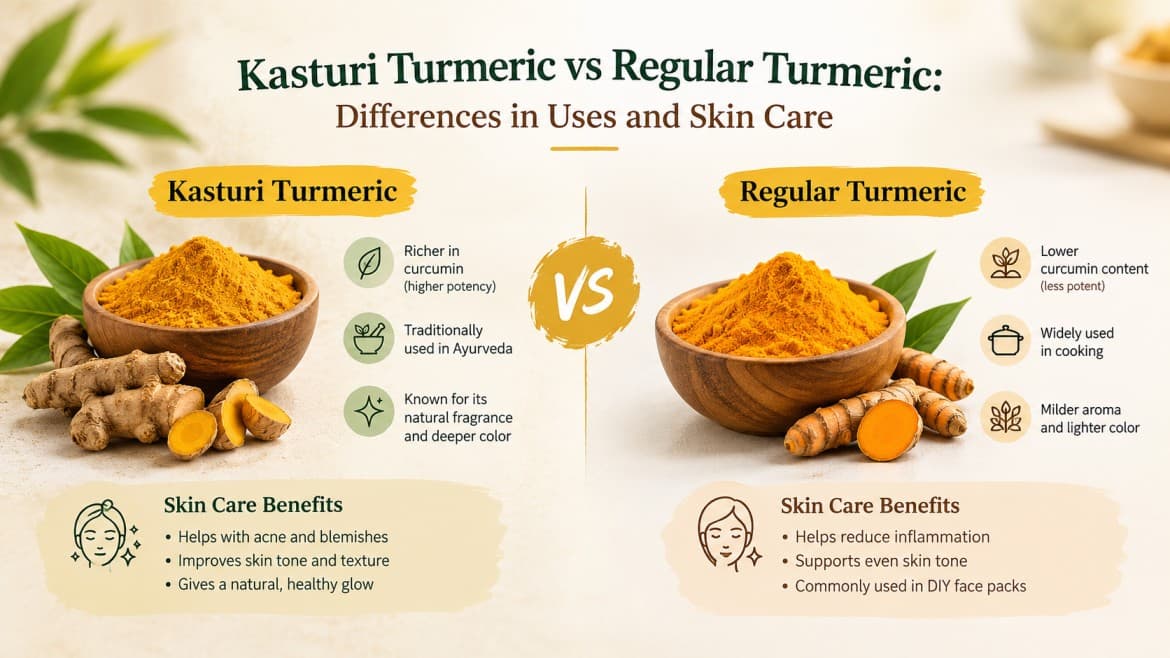
Turmeric has been used in Indian households for generations, both in cooking and traditional skincare routines. However, not all turmeric varieties are identical. Kasturi turmeric, also known as Kasturi Haldi or Kasthuri Manjal, is traditionally associated with skincare, while regular turmeric is widely used as a culinary spice.
Understanding the difference between Kasturi turmeric and regular turmeric can help you choose the right product for your intended use. In this guide, Madhumukthi explores their differences, traditional uses, skincare considerations and important precautions.
What Is Kasturi Turmeric?
Kasturi turmeric is commonly associated with wild turmeric, botanically known as Curcuma aromatica. It belongs to the same plant genus as regular culinary turmeric but is a different species.
In traditional Indian beauty practices, Kasturi turmeric has been used in face packs and other external skincare preparations. Its distinctive aroma and traditional cosmetic applications make it different from the turmeric commonly kept in kitchen spice cabinets.
Before purchasing Kasturi turmeric powder, check the product label for its botanical identity, ingredients, intended use and directions. Product names alone do not always establish the exact turmeric species or composition.
What Is Regular Turmeric?
Regular turmeric, scientifically known as Curcuma longa, is a popular spice used in Indian and other cuisines. Its underground stem is processed into the familiar golden-yellow turmeric powder.
Regular turmeric contains curcuminoids, including curcumin, which contributes to its characteristic yellow colour. It is commonly used to season vegetables, lentils, curries and other dishes.
Turmeric is also used in traditional household skincare preparations. However, culinary turmeric can leave a noticeable yellow tint on the skin, clothing and other surfaces.
Kasturi Turmeric vs Regular Turmeric: Key Differences
The main differences relate to botanical identity, traditional applications, colour, aroma and intended use.
| Feature | Kasturi Turmeric | Regular Turmeric |
|---|---|---|
| Common name | Kasturi Haldi or Kasthuri Manjal | Haldi or culinary turmeric |
| Botanical identity | Commonly Curcuma aromatica | Curcuma longa |
| Traditional application | External skincare preparations | Cooking and traditional household uses |
| Colour | Varies by variety and processing | Typically golden yellow to orange-yellow |
| Aroma | Often distinctive and aromatic | Earthy, warm and characteristic of a culinary spice |
| Skin staining | Staining varies by composition and formulation | Can leave a noticeable yellow stain |
| Intended use | Depends on the product label | Primarily a culinary spice |
Important: These are general differences between commonly identified varieties. Check the manufacturer's label rather than assuming every product sold under the name Kasturi turmeric has identical properties.
5 Important Differences in Skincare Uses
1. Traditional Skincare Applications
Kasturi turmeric is traditionally used in some Indian skincare routines, including herbal face packs and body-care preparations.
Regular turmeric is also found in traditional face packs, but its primary everyday role is as a cooking spice. If you are choosing turmeric specifically for your skincare routine, select a product labelled for external cosmetic use.
2. Skin Staining
One practical consideration when comparing Kasturi turmeric and regular turmeric is skin staining.
Regular turmeric contains yellow pigments that may temporarily colour the skin. The degree of staining depends on the concentration, formulation, contact time and individual skin characteristics.
Kasturi turmeric is often chosen for traditional cosmetic preparations, but staining cannot be ruled out for every product. Test the product on a small area first and follow its application instructions.
3. Aroma and Texture
Kasturi turmeric may have a distinctive aromatic profile that differs from the earthy smell of regular culinary turmeric.
Texture also varies depending on how the rhizome is processed and how finely the powder is ground. When purchasing turmeric powder for face packs, look for clear ingredient information and suitable cosmetic-use instructions.
4. Suitability for Different Skin Types
Natural ingredients do not automatically suit every skin type. Both turmeric varieties and products containing them may cause irritation or allergic reactions in some people.
If you have sensitive skin, eczema, an existing skin condition or a history of ingredient allergies, consult a dermatologist before trying a new preparation. Avoid applying turmeric powder to broken or irritated skin.
5. Choosing the Right Product
Your intended use should guide your choice.
For cooking, choose regular culinary turmeric that is labelled as suitable for food use.
For skincare, choose a product specifically intended for external application.
For either product, check the ingredients, manufacturer's directions, storage information and expiry date.
Do not assume a turmeric powder intended for cosmetic use is safe to eat, or that a culinary product has been formulated and tested for facial application.
How to Use Turmeric in a Skincare Routine
If you are considering a turmeric-based face pack, keep the routine simple and follow the product's directions.
Check the label: Confirm that the product is intended for external skincare use and review all ingredients.
Perform a patch test: Apply a small amount to a limited area of skin according to the product instructions. Stop if you experience redness, itching, burning or swelling.
Follow the recommended application method: Use only the suggested quantity and contact time. Avoid the eyes, lips and other sensitive areas.
Rinse gently: Remove the preparation as directed without scrubbing or irritating the skin.
Observe your skin: Discontinue use if irritation develops. Persistent acne, pigmentation or rashes should be assessed by a qualified dermatologist.
A turmeric face pack should not be considered a guaranteed treatment for acne, pigmentation, scars or other skin conditions. Scientific evidence for many traditional topical turmeric uses remains limited.
Can Kasturi Turmeric Replace Regular Turmeric?
No. The two products should not automatically be treated as interchangeable.
Regular turmeric is primarily used as a culinary ingredient. Kasturi turmeric is traditionally associated with external cosmetic preparations. Their botanical identities, composition and intended applications can differ.
If you need turmeric for cooking, choose a food-grade culinary product. If you want a turmeric-based skincare product, select one labelled for external use and follow the manufacturer's instructions.
How to Choose Quality Turmeric Powder
Whether you are purchasing Kasturi turmeric or regular turmeric, make an informed decision by checking the following:
Ingredient details: Look for the botanical name where available and review the complete ingredient list.
Intended use: Confirm whether the powder is intended for cooking or cosmetic application.
Manufacturer information: Choose products with clear manufacturer details and appropriate labelling.
Packaging: Prefer sealed packaging that protects the powder from moisture and contamination.
Storage instructions: Store the product according to the manufacturer's recommendations.
Claims and expectations: Be cautious of products promising guaranteed fairness, permanent pigmentation removal or cures for skin conditions.
For consumers exploring traditional turmeric products, Madhumukthi provides a product range that includes Shyamala Kasturi Turmeric Powder and Shyamala Turmeric Powder. Review the individual product details to understand their stated ingredients and intended uses before purchasing.
Explore the Madhumukthi product range for more information.
Frequently Asked Questions
1. What is the difference between Kasturi turmeric and regular turmeric?
Kasturi turmeric commonly refers to wild turmeric (Curcuma aromatica), traditionally used in external skincare preparations. Regular turmeric ( Curcuma longa) is primarily used as a culinary spice. Their composition, aroma, colour and applications may differ.
2. Is Kasturi turmeric better than regular turmeric for skincare?
Kasturi turmeric has a traditional association with skincare, while regular turmeric is mainly used in cooking. However, neither variety is automatically suitable for every skin type, and evidence for specific cosmetic benefits is limited. Choose products intended for external use and perform a patch test.
3. Does Kasturi turmeric stain the skin?
Kasturi turmeric is often selected for cosmetic use because it may stain less than regular turmeric. However, staining depends on the product's composition and formulation, so it cannot be guaranteed that every Kasturi turmeric product will leave no colour.
4. Can regular turmeric be applied to the face?
Regular turmeric is used in some traditional face packs, but it can stain the skin and may cause irritation in some people. If you choose to use it topically, exercise caution, avoid sensitive or damaged skin and discontinue use if irritation develops.
5. Can Kasturi turmeric be used for cooking?
Do not assume that a product sold as Kasturi turmeric is suitable for consumption. Use it for cooking only if the manufacturer explicitly identifies it as food-grade and suitable for that purpose. Products labelled for external use should not be eaten.
6. How should turmeric powder be stored?
Keep turmeric powder in a clean, dry, tightly sealed container and follow the manufacturer's storage instructions. Protect it from moisture, heat and direct sunlight to help maintain its quality.
7. Can turmeric remove acne or pigmentation permanently?
Turmeric should not be considered a proven permanent treatment for acne, pigmentation or scarring. Persistent skin concerns may require professional assessment and evidence-based treatment from a dermatologist.
Conclusion
Kasturi turmeric and regular turmeric belong to the same plant genus, but they have different traditional applications and may differ in composition and physical characteristics. Regular turmeric is widely used in cooking, whereas Kasturi turmeric is commonly associated with traditional skincare preparations.
When choosing between them, consider your intended use, verify the product label and follow the manufacturer's directions. A suitable skincare routine should also account for individual skin sensitivity and realistic expectations.
Madhumukthi encourages consumers to make informed product choices by reviewing product details carefully and prioritising safe, appropriate use of turmeric-based products.
Editor User
BAMS, MD (Ayurveda)Senior Ayurvedic Clinical Specialist with over 18 years of experience in metabolic disorders, Prameha (Madhumeha) management, and herbal phytotherapy.
Ready to Naturalize Your Blood Sugar Levels?
Explore our FSSAI-certified Madhumukthi products crafted with pure natural herbs and low GI grains.
Shop All Products