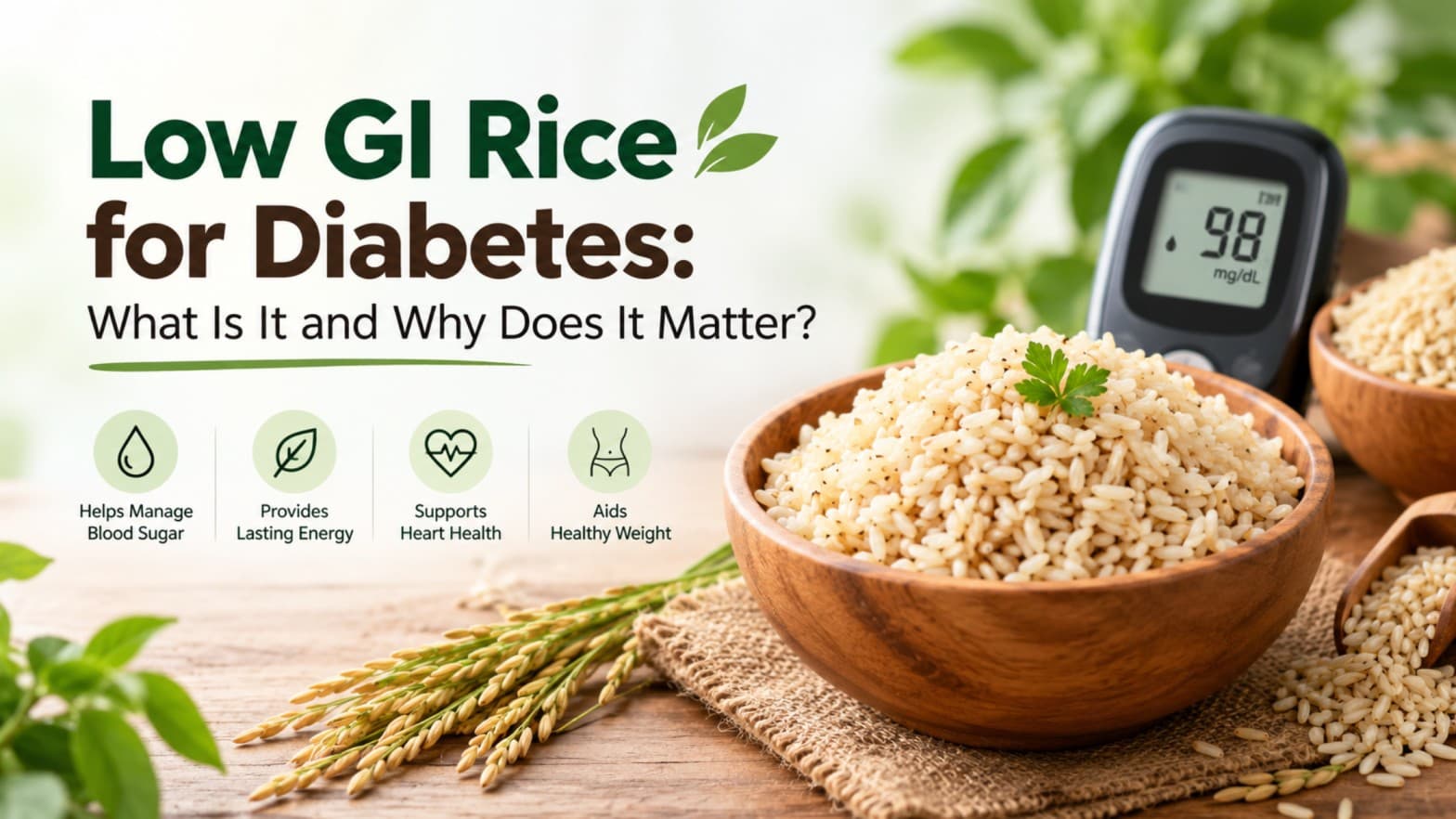
Low GI Rice for Diabetes: What Is It and Why Does It Matter?
Medically Reviewed & Fact-Checked by Ayurvedic Physicians
This clinical article is authored and reviewed by qualified Ayurvedic doctors (BAMS) conforming to authentic Ayurvedic principles and classical references from the Charaka Samhita. Educational content only; not a replacement for individual medical diagnosis.
Introduction
If you have searched for low GI rice for diabetes, you may have seen terms such as glycemic index, blood sugar, diabetic-friendly rice and slow-release carbohydrates.
But what exactly is low-GI rice, and why do people consider it when choosing rice?
What Does GI Mean?
GI stands for Glycemic Index.
It is a system used to compare how quickly carbohydrate-containing foods raise blood glucose compared with a reference food.
Foods are generally classified as:
Low GI: 55 or below
Medium GI: 56–69
High GI: 70 or above
The actual GI of a food can vary according to its variety, processing, cooking and other factors.
Why Is Low GI Rice Popular?
People searching for low glycemic rice are usually looking for rice that may result in a slower rise in blood glucose.
This can be relevant when planning meals for diabetes.
However, low GI does not mean “zero carbohydrate.”
A sensible serving size is still important.
Low GI Rice vs Regular Rice
Different rice varieties can have different glycemic characteristics.
Brown rice, certain basmati varieties, black rice and some traditional rice varieties are often discussed when comparing rice choices.
However, you should not assume that every rice of a particular colour or variety has the same GI.
If a brand makes a specific GI claim, consumers should look for reliable supporting information.
How to Choose Low GI Rice
Before buying low GI rice for diabetes, check:
Rice Variety
Know exactly what type of rice you are buying.
Nutrition Information
Look at carbohydrate, fibre and serving information.
Processing
Processing and polishing can influence nutritional characteristics.
Cooking Instructions
Follow the recommended cooking method.
Testing Information
If a product claims a specific GI value, look for credible product-specific testing.
Does Low GI Mean You Can Eat Unlimited Rice?
No.
This is an important point.
Even lower-GI rice contains carbohydrates.
Eating a large quantity can still increase the total carbohydrate load of a meal.
Therefore, portion control remains important.
How to Build a Balanced Rice Meal
Try combining a moderate rice portion with:
Vegetables
Dal
Suitable protein
Fibre-rich foods
This creates a more balanced meal than eating a large portion of rice alone.
Madhumukthi and Low GI Rice
Madhumukthi offers rice products for consumers looking for diabetes-conscious food choices.
Madhumukthi product pages should clearly communicate:
Product variety
Nutrition information
Serving size
Preparation instructions
Ingredients
Available quality/testing information
This allows customers searching for low GI rice in India to make an informed choice.
FAQs
What is low GI rice?
Low GI rice refers to rice with a comparatively lower glycemic index, generally classified as 55 or below when measured using a suitable testing method.
Is low GI rice suitable for diabetes?
It may be suitable for some people as part of a balanced eating pattern, but portion size and individual dietary requirements still matter.
What is the best low GI rice for diabetes?
There is no universal best option. Consumers should compare the variety, nutrition, serving size and reliable GI information.
Does low GI rice prevent blood sugar increases?
No food can be guaranteed to prevent a blood-glucose increase. Low-GI foods generally produce a slower rise than higher-GI foods.
Conclusion
Low GI rice for diabetes is an important food choice topic because rice is a major part of Indian diets.
Rather than completely avoiding rice, people can learn about different varieties, portion control and balanced meals.
Madhumukthi can support this search intent by providing transparent information about its rice products and helping customers make informed choices.
Editor User
BAMS, MD (Ayurveda)Senior Ayurvedic Clinical Specialist with over 18 years of experience in metabolic disorders, Prameha (Madhumeha) management, and herbal phytotherapy.
Ready to Naturalize Your Blood Sugar Levels?
Explore our FSSAI-certified Madhumukthi products crafted with pure natural herbs and low GI grains.
Shop All Products