- Free Shipping in AP & Telangana

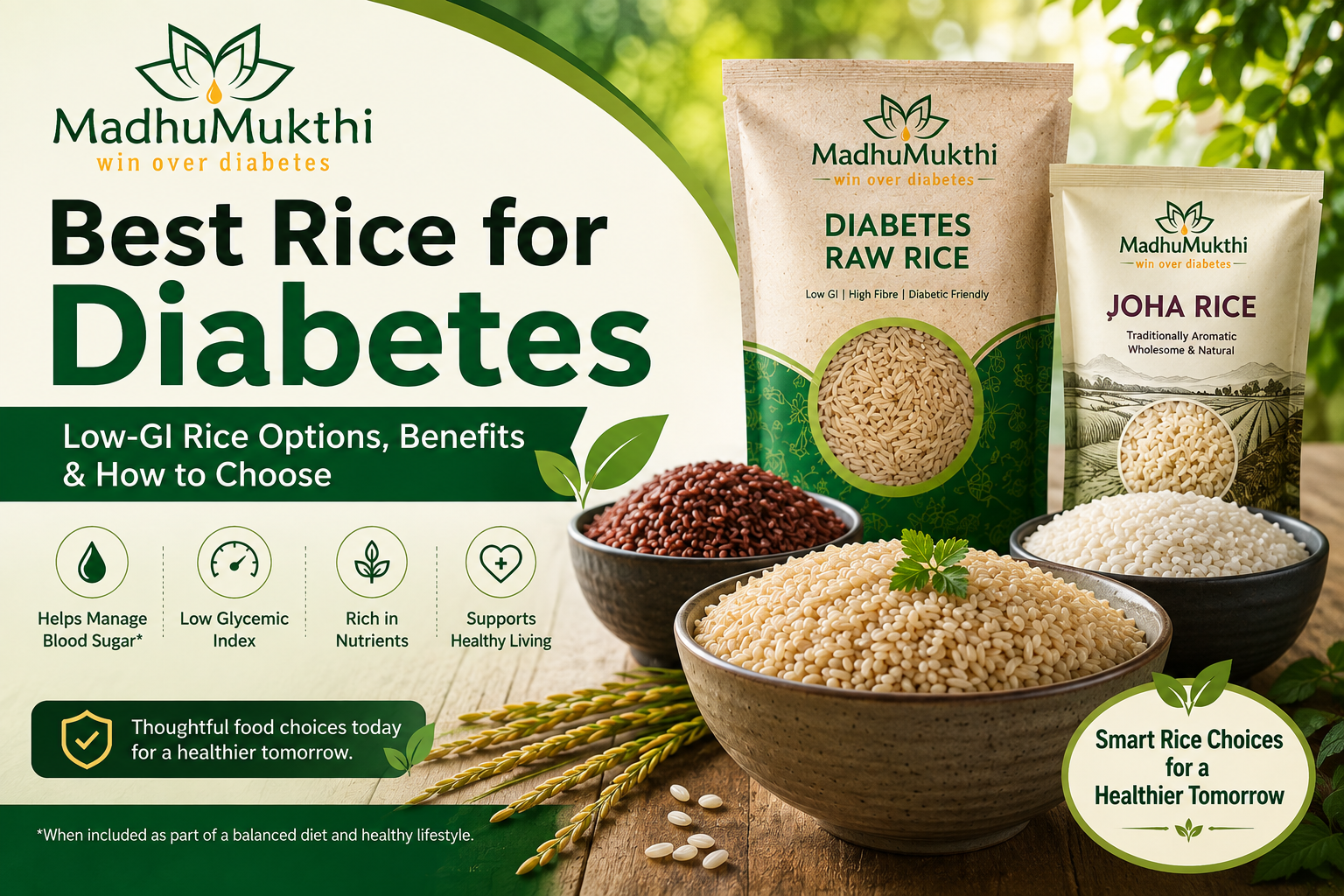
Best Rice for Diabetes: Low-GI Rice Options, Benefits & How to Choose

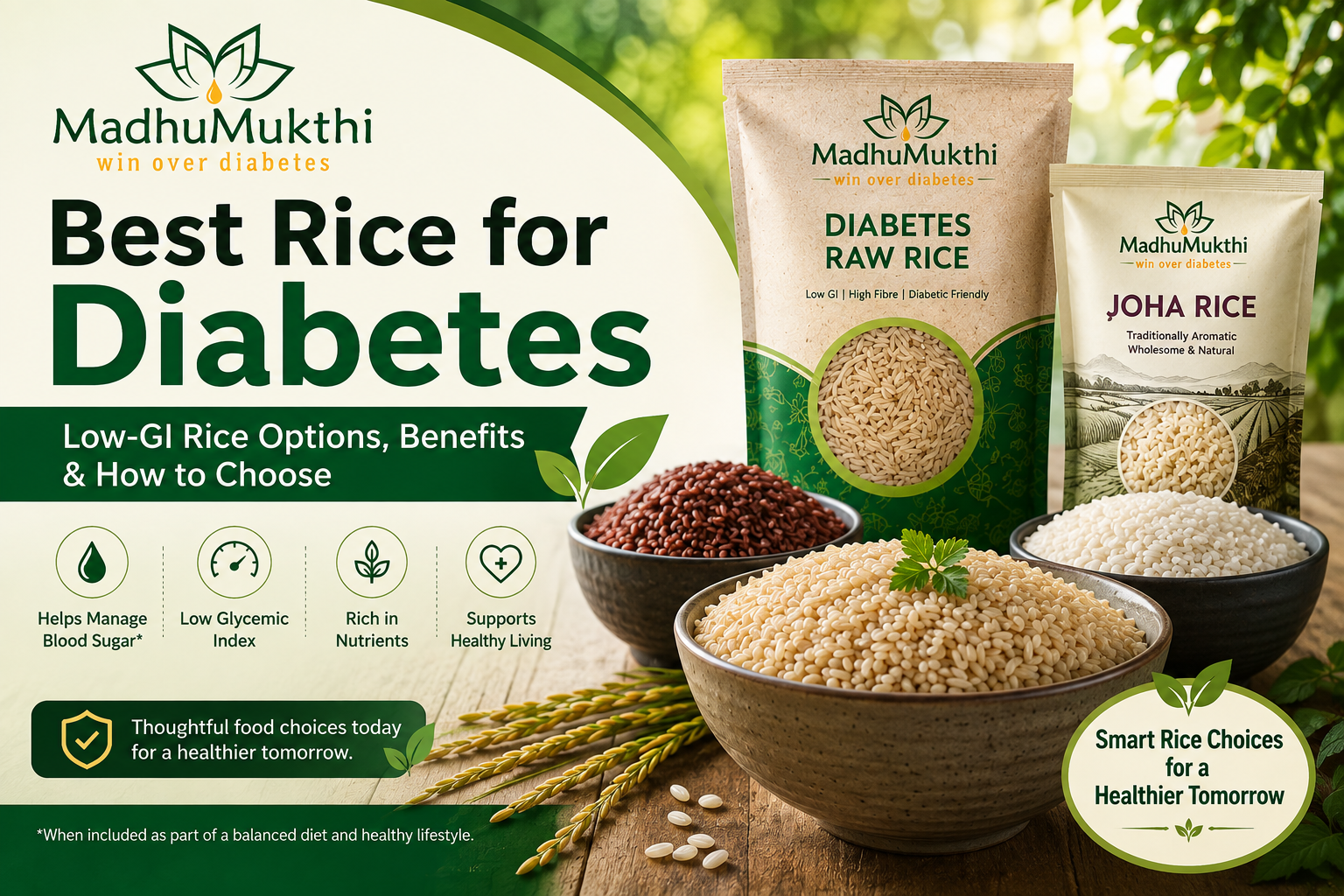
Rice is a staple food in many Indian households, but people managing diabetes often wonder whether they need to stop eating rice completely. The good news is that people with diabetes may be able to include rice in a balanced diet, but the type of rice, portion size, cooking method and what is eaten with it can all make a difference.
Choosing a rice variety with a lower glycemic impact may be one option to consider when planning diabetes-friendly meals. Understanding terms such as glycemic index (GI), portion control and carbohydrate content can help you make more informed food choices Best Rice for Diabetes.
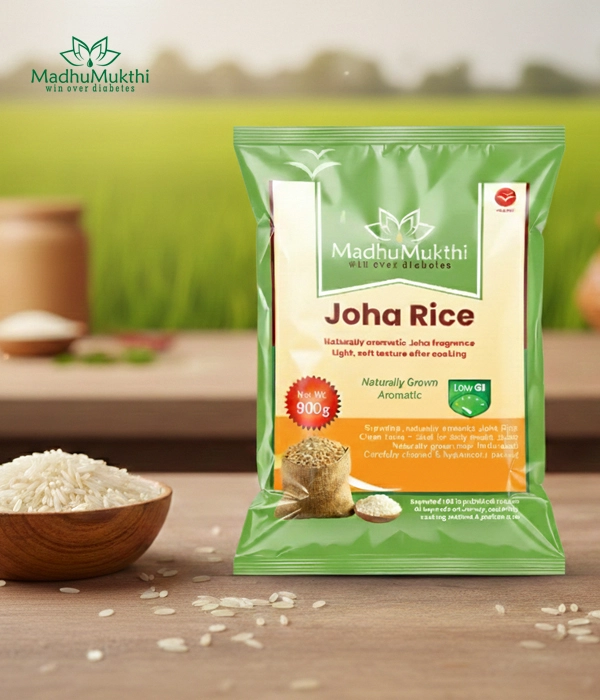
For people looking for rice for diabetes, Madhumukthi offers rice options designed to fit into a mindful, balanced approach to everyday eating, including its Madhumukthi Diabetes Raw Rice and Joha Rice.
Important: Rice is a carbohydrate-containing food. People with diabetes should consider their overall carbohydrate intake and individual blood glucose response. Food choices should complement, not replace, advice from a qualified healthcare professional.
What Is the Glycemic Index?
The glycemic index (GI) is a system used to classify carbohydrate-containing foods according to how quickly they can raise blood glucose compared with a reference food.
Foods are generally categorized as:
Low GI: 55 or below
Medium GI: 56–69
High GI: 70 or above
However, GI alone does not tell the complete story. The amount of carbohydrate eaten also matters. This is why portion size and overall meal composition are important when choosing rice for diabetes.
Different rice varieties can have different GI values depending on factors such as the rice type, processing, cooking method and preparation.
Can People With Diabetes Eat Rice?
Yes, rice can potentially be included in a diabetes-friendly meal plan. However, the appropriate amount varies from person to person.
Rather than completely eliminating rice, consider:
Choosing suitable rice varieties
Controlling portion sizes
Adding vegetables to meals
Including an appropriate source of protein
Choosing minimally processed foods where possible
Monitoring your individual blood glucose response
Following the dietary advice provided by your healthcare professional
For someone searching for the best rice for diabetes, the goal should not simply be finding a particular rice variety. It should be finding a rice option that fits comfortably into an overall balanced eating pattern.
What Makes a Rice Variety a Better Choice for Diabetes?
When choosing rice for diabetes, consider several factors rather than focusing only on the name of the rice.
- Glycemic Index
A lower-GI food generally causes a slower rise in blood glucose than a higher-GI food. If you are comparing rice varieties, understanding their GI can help you make a more informed choice.
Keep in mind that the GI of a food can vary depending on preparation and other factors.
- Portion Size
Even a lower-GI carbohydrate can contribute a significant amount of carbohydrate when eaten in a large portion.
Instead of filling most of your plate with rice, consider balancing your meal with:
Non-starchy vegetables
Protein-rich foods
Appropriate healthy fats
A controlled serving of rice
- Processing
The degree of processing can influence the nutritional characteristics of rice. When comparing products, look at the processing method, nutritional information and serving size.
- Overall Nutrition
Don’t choose rice based on GI alone. Check the nutritional information and consider factors such as:
Carbohydrate content
Fibre
Protein
Serving size
Processing
Overall meal composition
Which Is the Best Rice for Diabetes?
There is no single rice variety that is universally the best rice for diabetes.
Different varieties may work differently for different people. Some commonly discussed options include:
Brown rice
Basmati rice
Certain traditional rice varieties
Some minimally processed rice varieties
Selected low-GI rice products
The right choice depends on your dietary needs, portion size, preparation method and individual blood glucose response.
If you are specifically searching for low GI rice for diabetes, check the product’s nutritional information and, where available, reliable information about its glycemic characteristics.
Madhumukthi Diabetes Raw Rice
For consumers looking for a rice option specifically positioned around diabetes-conscious eating, Madhumukthi Diabetes Raw Rice is one of the products available from Madhumukthi.
When choosing any packaged rice product, read the product information carefully and consider:
Serving size
Total carbohydrate
Fibre content
Ingredients
Preparation instructions
Your personal dietary requirements
Madhumukthi’s rice products can be explored as part of a broader approach to balanced eating rather than being treated as a substitute for diabetes medication or professional medical care.
What Is Joha Rice?
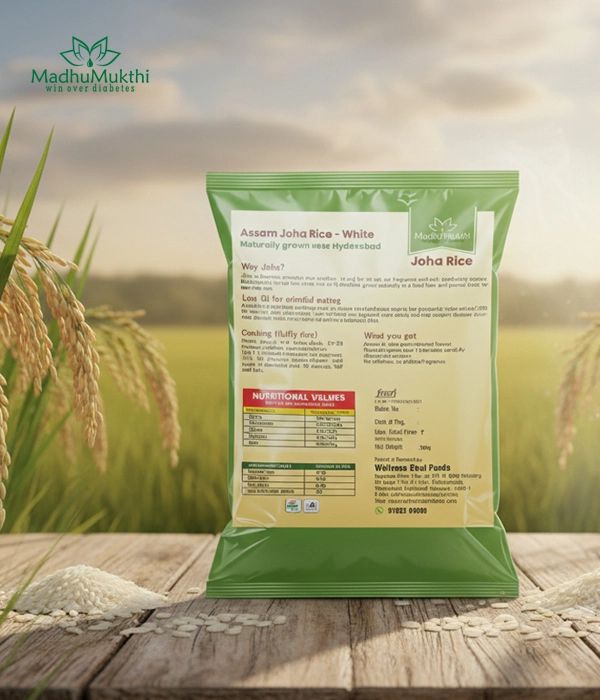
Joha rice is a traditional aromatic rice variety associated particularly with Assam and parts of Northeast India.
It is known for its distinctive aroma and small-grain characteristics. For people exploring alternatives to commonly consumed rice varieties, Joha rice can be another option to consider.
If you are comparing Joha Rice vs regular rice, don’t assume that one variety is automatically suitable for everyone with diabetes. Look at the nutritional information, serving size and your individual response to the food.
Madhumukthi provides Joha Rice as part of its range of food products.
Low-GI Rice vs Regular Rice: What’s the Difference?
One of the most common questions is whether low-GI rice is better than regular rice for diabetes.
The main difference is related to how quickly the carbohydrate in the food may affect blood glucose.
However, the actual impact of a rice meal depends on several factors, including:
Rice variety
Processing
Cooking method
Portion size
What you eat with the rice
Individual metabolism
Overall meal composition
For example, eating a moderate serving of rice with vegetables and a suitable protein source can create a very different meal from eating a large bowl of plain rice by itself.
How Much Rice Can a Person With Diabetes Eat?
There is no single portion size that works for everyone with diabetes.
Your ideal carbohydrate intake depends on factors such as:
Blood glucose levels
Medication
Physical activity
Age
Body composition
Other health considerations
Individual dietary requirements
A dietitian or healthcare professional can help determine an appropriate portion.
A simple starting point for balanced meal planning is to avoid making rice the majority of the plate. Instead, combine a controlled rice portion with plenty of non-starchy vegetables and an appropriate protein source.
How to Make Rice More Diabetes-Friendly
The way you prepare and serve rice matters.
Choose a sensible portion
Avoid automatically serving a large bowl of rice. Start with a moderate portion and adjust according to your individual dietary plan.
Add vegetables
Vegetables can add fibre, volume and nutrients to your meal.
Try combining rice with:
Beans
Carrots
Cauliflower
Cabbage
Spinach
Bottle gourd
Green vegetables
Other non-starchy vegetables
Include protein
Pairing your rice with an appropriate protein source can make the meal more balanced
Depending on your dietary preferences, options may include:
Dal
Beans
Eggs
Fish
Chicken
Paneer
Tofu
Be careful with side dishes
A rice meal can become less balanced when it is accompanied by large amounts of fried foods, sugary sauces or highly processed side dishes.
Does Cooking Method Affect Rice and Blood Sugar?
Cooking can influence the texture and digestibility of rice, which may affect its impact on blood glucose.
Overcooking rice can make it softer and easier to digest. The overall effect, however, depends on the rice variety and other factors.
Rather than relying on one cooking trick, focus on:
Choosing an appropriate rice variety
Maintaining sensible portions
Combining rice with vegetables and protein
Avoiding excessive added sugar and highly processed accompaniments
Monitoring your own blood glucose response when advised by your healthcare professional
Eating very large portions
Rice for Diabetes: Common Mistakes to Avoid
Even foods cnsidered lower GI can contribute substantial carbohydrates when consumed in large quantities.
Assuming all low-GI foods are unlimited
Low GI does not mean carbohydrate-free or calorie-free.
Eating rice without other food groups
A balanced meal should contain a variety of foods rather than relying primarily on rice.
Ignoring individual blood glucose response
People can respond differently to the same food.
Replacing prescribed treatment with food products
No rice variety should be considered a replacement for prescribed diabetes medication or professional medical care.
Best Rice for Diabetes: What Should You Look For?
Before buying rice, consider the following checklist:
Factor What to Check
Rice variety Understand what type of rice you are buying
GI information Check reliable GI information where available
Carbohydrates Review the nutrition label
Fibre Compare fibre content where relevant
Serving size Check the recommended serving
Processing Understand how the rice is processed
Cooking method Follow appropriate preparation instructions
Personal response Monitor blood glucose as advised
This approach is more useful than simply searching for a product labelled “diabetic rice.”
How Madhumukthi Can Fit Into a Diabetes-Conscious Diet
Madhumukthi focuses on products and educational resources related to diabetes-conscious nutrition and wellness.
Its range includes products such as:
Madhumukthi Diabetes Raw Rice
Joha Rice
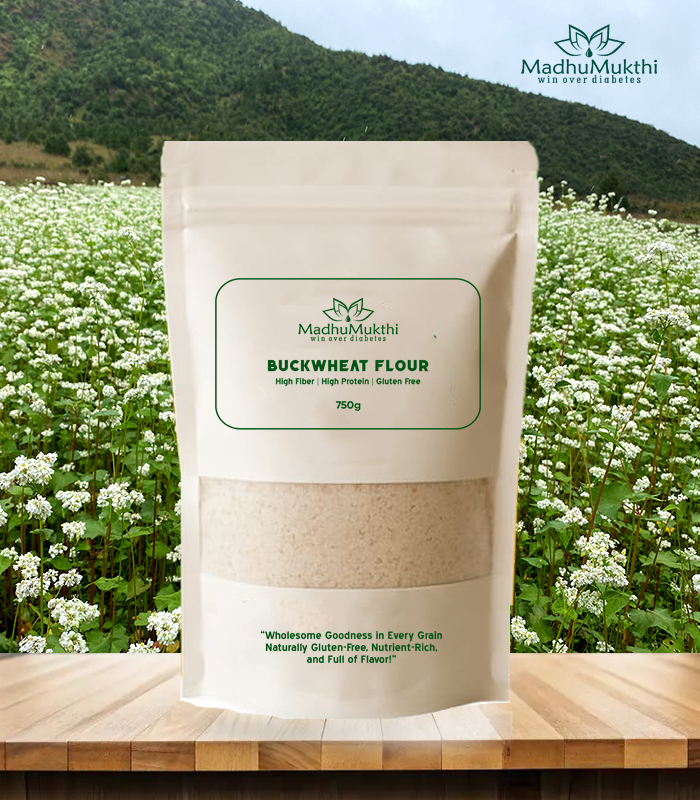
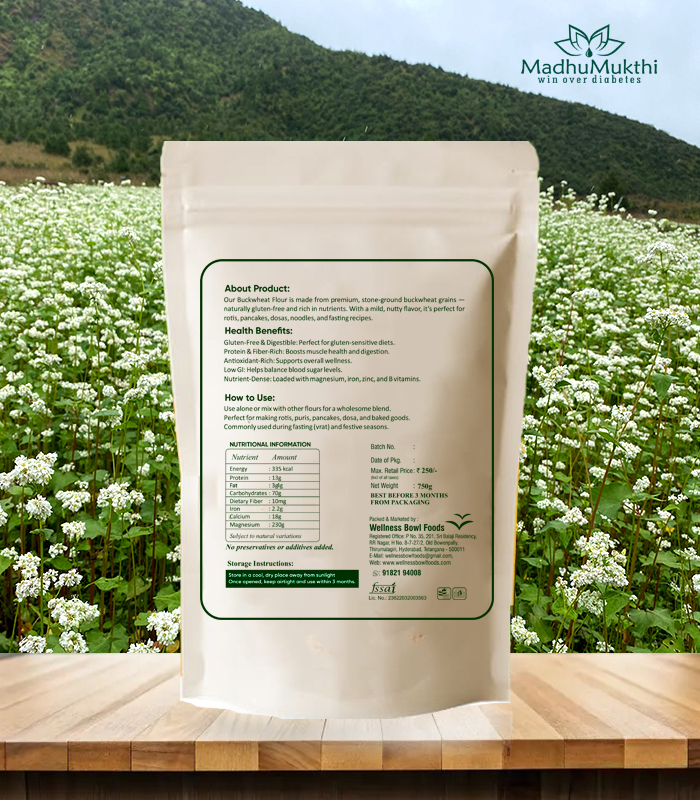
Buckwheat Flour
Natural Sweetener
Other food and wellness products
If you are considering these products, review the individual product information and nutritional details before purchasing.
Madhumukthi’s products should be considered as part of an overall healthy lifestyle and balanced dietary pattern. They should not be presented as a cure for diabetes or as a replacement for prescribed treatment.
Frequently Asked Questions
What is the best rice for diabetes?
There is no single rice variety that is best for everyone with diabetes. Consider the rice type, carbohydrate content, portion size, preparation method and your individual blood glucose response.
Is low-GI rice good for diabetes?
Lower-GI rice may be an option for people managing diabetes, but portion size and total carbohydrate intake still matter. Discuss your individual dietary needs with a healthcare professional.
Can diabetics eat rice every day?
Some people with diabetes may include rice regularly in their meal plan. The appropriate amount depends on individual nutritional requirements, blood glucose management and overall diet.
Is white rice bad for diabetes?
White rice is a carbohydrate-rich food and can raise blood glucose. People with diabetes do not necessarily need to eliminate it completely, but portion control and overall meal composition are important.
Is Joha rice good for diabetes?
Joha rice can be considered as one of the rice varieties available to consumers. However, whether it is appropriate for an individual depends on portion size, nutritional requirements and blood glucose response.
What is low-GI rice?
Low-GI rice refers to rice that has a relatively lower glycemic index compared with higher-GI varieties. The actual GI can vary based on the rice variety and preparation.
Is Madhumukthi Diabetes Raw Rice suitable for everyone with diabetes?
Individual dietary needs differ. People with diabetes should review the product’s nutritional information and consult a qualified healthcare professional if they have questions about whether it fits their diet.
Can rice be part of a balanced diabetes diet?
Yes. Rice can be included in many diabetes-friendly meal plans when consumed in an appropriate portion and combined with vegetables, protein and other nutritious foods.
Final Thoughts
Finding the best rice for diabetes is not simply about choosing one particular variety. A better approach is to consider the rice type, glycemic characteristics, carbohydrate content, portion size, cooking method and the foods included in the same meal.
Options such as Madhumukthi Diabetes Raw Rice and Joha Rice can be explored alongside other nutritious foods as part of a balanced eating pattern.
If you have diabetes, prediabetes or another health condition affecting blood glucose, work with your doctor or registered dietitian to determine which foods and portions are appropriate for your individual needs.
For more information about diabetes-conscious foods and wellness products, explore the educational resources and product range available from Madhumukthi.