
Which Rice Is Better for Blood Sugar: White Rice, Brown Rice or Low-GI Rice?
Medically Reviewed & Fact-Checked by Ayurvedic Physicians
This clinical article is authored and reviewed by qualified Ayurvedic doctors (BAMS) conforming to authentic Ayurvedic principles and classical references from the Charaka Samhita. Educational content only; not a replacement for individual medical diagnosis.
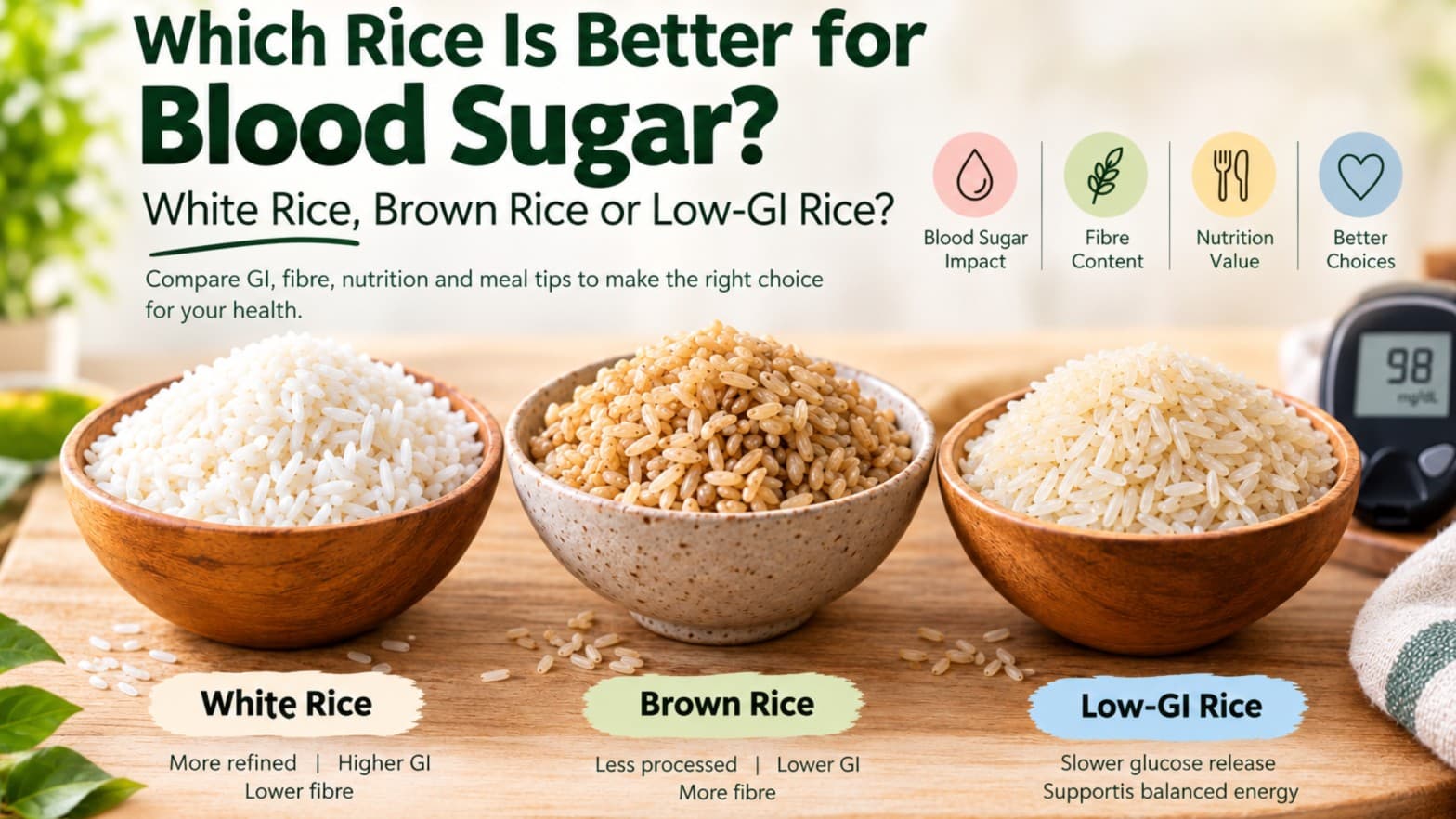
Rice is a regular part of meals across India, but if you are trying to manage blood sugar, you may wonder which type is a better choice: white rice, brown rice, or low-GI rice.
The answer is not simply about removing rice from your diet. The type of rice, portion size, cooking method, and what you eat with it can all influence how a meal affects blood glucose.
For people looking for a more balanced approach to everyday meals, understanding the difference between these rice varieties can make choosing the right option easier.
Quick Answer: Which Rice Is Better for Blood Sugar?
For people who want to manage blood sugar through their diet, low-GI rice may be a useful option because it can produce a slower rise in blood glucose compared with higher-GI rice.
Brown rice can also be a nutritious choice because it generally contains more fibre and retains more of the grain than white rice.
White rice is more refined and usually has less fibre. However, it does not necessarily need to be completely avoided. Portion size and the overall meal are important factors.
The best choice can therefore depend on your individual dietary needs, preferences, and health goals.
White Rice vs Brown Rice vs Low-GI Rice
| Rice Type | Processing | Fibre | Blood Sugar Response | Everyday Consideration |
|---|---|---|---|---|
| White Rice | More processed | Lower | Generally higher GI | Watch portion size |
| Brown Rice | Less processed | Higher | Generally lower than white rice | More fibre and a nuttier texture |
| Low-GI Rice | Varies by variety and processing | Depends on the rice | Designed to produce a slower glucose response | Check the specific product's GI information |
Important: The glycemic index can vary depending on the rice variety, processing, cooking method and serving. Therefore, not every rice labelled or marketed as "healthy" automatically has a low GI.
1. White Rice and Blood Sugar
White rice is produced by removing the outer layers of the grain, including the bran and germ. This makes it softer, quicker to cook and easier to digest.
However, much of the natural fibre is removed during processing.
Because of its relatively low fibre content, many types of white rice can have a relatively high glycemic index. This means they may cause blood glucose to rise more quickly than some less-refined or low-GI alternatives.
Does this mean you cannot eat white rice?
Not necessarily.
If you enjoy white rice, you can focus on:
- Keeping portions moderate
- Adding vegetables to your meal
- Including a protein source
- Choosing fibre-rich side dishes
- Avoiding excessive refined carbohydrates in the same meal
The overall composition of the meal matters.
2. Brown Rice and Blood Sugar
Brown rice retains the bran and germ because it undergoes less milling than white rice.
As a result, it generally contains more fibre and nutrients than white rice.
The additional fibre can slow digestion and may contribute to a more gradual release of glucose.
However, brown rice is not automatically low-GI in every situation. Its glycemic response can vary according to the variety, cooking method and serving size.
Why do some people choose brown rice?
Brown rice may be considered when you want:
- More dietary fibre
- A less-refined grain
- A more filling meal
- Greater variety in your diet
Its stronger texture and nutty flavour can take some time to get used to if you are accustomed to white rice.
3. What Is Low-GI Rice?
GI stands for Glycemic Index.
It is a measure used to classify carbohydrate-containing foods according to how quickly they raise blood glucose compared with a reference food.
A lower-GI food generally produces a slower and smaller rise in blood glucose than a higher-GI food containing a similar amount of available carbohydrate.
Low-GI rice varieties are therefore becoming an option for people who want to continue eating rice while paying closer attention to their carbohydrate choices.
However, the term "low-GI rice" should not be treated as a guarantee that the food will have the same effect on everyone.
Is Low-GI Rice Better Than White Rice?
For someone specifically looking to reduce the blood glucose impact of a rice-based meal, a properly identified low-GI rice may be a more suitable choice than a high-GI white rice variety.
But this does not mean that low-GI rice can be eaten without considering quantity.
A large serving of any carbohydrate-rich food can contribute significant carbohydrate to a meal.
That is why rice type + portion size + meal composition should be considered together.
Is Brown Rice Better Than White Rice?
Brown rice generally provides more fibre because it retains more parts of the whole grain.
For this reason, it can be a useful alternative to highly refined grains.
However, "brown" does not automatically mean "low GI."
If your main concern is the glycemic response of a particular rice, look for reliable information about the specific variety and its tested GI value, rather than choosing solely based on colour.
Low-GI Rice vs Brown Rice: Which Should You Choose?
There is no universal answer.
Choose based on what matters most to your diet.
Choose brown rice if:
- You want a less-refined grain.
- You want more dietary fibre.
- You enjoy its texture and flavour.
- It fits comfortably into your regular meals.
Consider low-GI rice if:
- You specifically want to focus on the glycemic response of your rice.
- The product has reliable information supporting its low-GI classification.
- You want to continue eating rice while making more carbohydrate-conscious choices.
If you prefer white rice:
You do not necessarily have to eliminate it.
Instead, consider a moderate serving and pair it with vegetables, pulses, legumes or a suitable protein source to create a more balanced meal.
How Much Rice Should You Eat?
There is no single rice portion that is appropriate for everyone.
Your ideal portion can depend on factors such as:
- Age
- Activity level
- Total carbohydrate intake
- Other foods in the meal
- Individual blood glucose response
- Dietary requirements
Instead of focusing only on eliminating rice, consider building a balanced plate.
A practical approach is to include:
Non-starchy vegetables + protein + a controlled portion of carbohydrate
For people managing diabetes, a registered dietitian or healthcare professional can help determine an appropriate carbohydrate and portion plan.
How to Make a Rice Meal More Balanced
The way you serve rice can matter just as much as the rice variety.
Try combining rice with:
Vegetables
Add leafy vegetables, gourds, beans, cauliflower, carrots or other non-starchy vegetables.
Protein
Depending on your dietary preference, this could include dal, beans, lentils, eggs, fish, chicken, paneer or other protein-rich foods.
Fibre-rich foods
Vegetables, legumes and other high-fibre foods can make a meal more filling and balanced.
Controlled portions
Rather than filling most of the plate with rice, keep the rice portion appropriate for your individual dietary plan.
Is Low-GI Rice Suitable for Indian Meals?
Yes. Low-GI rice can be incorporated into many familiar Indian meals.
You can serve it with:
- Dal
- Vegetable curries
- Sambar
- Rasam with vegetables
- Grilled or cooked protein
- Curd, where appropriate
- Vegetable-based side dishes
The objective is not to completely change traditional Indian meals but to make them more balanced.
What About Madhumukthi Low-GI Rice?
Madhumukthi offers low-GI rice options, including Joha Rice, for consumers looking for rice choices that fit into a more carbohydrate-conscious lifestyle.
Joha Rice is an aromatic rice variety that Madhumukthi positions as a low-GI option.
If you are considering a low-GI rice product, check the product information and serving guidance rather than assuming that every low-GI-labelled rice will have the same nutritional profile.
White Rice, Brown Rice or Low-GI Rice: Final Comparison
If your priority is fibre, brown rice may be worth considering.
If your priority is a slower blood glucose response from your rice choice, a verified low-GI rice may be worth considering.
If you prefer white rice, portion control and balanced meal composition can still play an important role.
There is no need to view rice as an all-or-nothing food.
The more useful approach is to understand the differences between rice varieties and choose the option that fits your dietary needs and lifestyle.
Frequently Asked Questions
Which rice is best for blood sugar?
There is no single rice that is best for everyone. For people looking to reduce the glycemic impact of their rice meal, a verified low-GI rice may be a useful option. Brown rice can also provide more fibre than white rice.
Is brown rice low GI?
Brown rice can have a lower glycemic response than some types of white rice, but not every brown rice variety has a low GI. GI depends on the specific rice variety, processing and preparation.
Can people with diabetes eat white rice?
People with diabetes may be able to include white rice as part of an overall balanced diet. Portion size, meal composition and individual blood glucose response are important considerations.
Is low-GI rice better than white rice?
A low-GI rice may produce a slower blood glucose response than a higher-GI rice. However, portion size still matters because rice is a carbohydrate-containing food.
Is Joha Rice low GI?
Joha Rice is a rice variety that is marketed in low-GI products. If you are choosing a specific Joha Rice product, check the manufacturer's nutritional and GI information for that product.
Does washing rice reduce its glycemic index?
Washing rice primarily removes surface starch and impurities. It should not be assumed that washing alone will turn a high-GI rice into a low-GI rice.
Can I eat rice every day if I am managing blood sugar?
Rice can be included in many balanced diets, but the appropriate quantity varies from person to person. Consider portion size, the type of rice and what you eat with it.
What is more important: rice type or portion size?
Both matter. Choosing a lower-GI rice may influence the rate of glucose release, while portion size determines how much carbohydrate you consume. Looking at both factors is more useful than focusing on only one.
Editor User
BAMS, MD (Ayurveda)Senior Ayurvedic Clinical Specialist with over 18 years of experience in metabolic disorders, Prameha (Madhumeha) management, and herbal phytotherapy.
Ready to Naturalize Your Blood Sugar Levels?
Explore our FSSAI-certified Madhumukthi products crafted with pure natural herbs and low GI grains.
Shop All Products