- Free Shipping in AP & Telangana

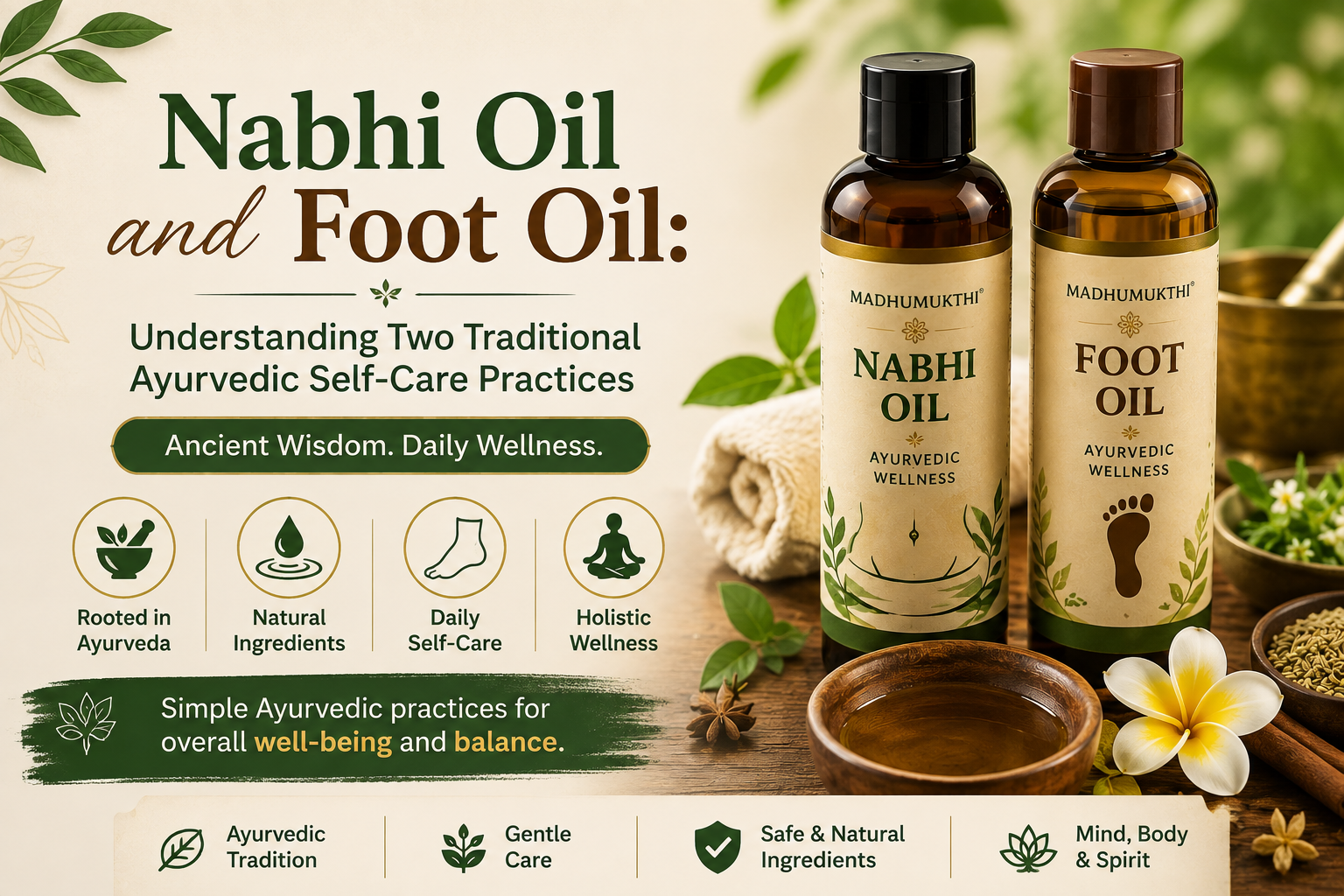
Nabhi Oil and Foot Oil: Understanding Two Traditional Ayurvedic Self-Care Practices


Introduction
Ayurveda has long emphasized simple self-care practices as part of a balanced wellness routine. Among these practices, Nabhi Oil and Foot Oil are often used as part of traditional personal-care routines.
Nabhi Oil refers to oil applied around the navel area, while Foot Oil is used for external foot and skin care. Today, these traditional practices are gaining attention among people looking for simple ways to include Ayurvedic-inspired self-care in their daily routines.
But what exactly are Nabhi Oil and Foot Oil? How are they traditionally used? And what should you know before adding them to your routine?
This guide explains the traditional context, practical use, benefits for everyday skin and foot care, and important safety considerations.
What Is Nabhi Oil?
Nabhi Oil is an oil used externally around the navel, a practice commonly referred to as navel oiling or Nabhi oiling.
In traditional Ayurvedic wellness practices, the navel area has been given importance as part of the body’s overall wellness framework. Modern wellness routines have brought renewed attention to this practice, particularly as a simple nighttime self-care ritual.
However, traditional Ayurvedic use should not be confused with scientifically established medical treatment. Applying oil to the navel should not be considered a treatment for diabetes, digestive disorders, hormonal conditions or other medical diseases.
What Are the Traditional Uses of Nabhi Oil?
People who practice navel oiling may include it in their personal-care routine for reasons such as:
- Supporting a relaxing self-care ritual
- Moisturizing the skin around the navel
- Incorporating traditional Ayurvedic practices into everyday wellness
- Supporting a simple nighttime massage routine
- Maintaining skin comfort in the abdominal area
The specific effects can depend on the oil’s ingredients, individual skin type and how the product is used.
Does Nabhi Oil Have Proven Medical Benefits?
It is important to distinguish traditional use from clinical evidence.
Navel oiling is a traditional wellness practice, but there is limited high-quality clinical evidence showing that applying oil to the navel produces systemic health benefits.
Therefore, it is better to describe Nabhi Oil as part of a traditional self-care routine rather than claiming that it can cure or treat medical conditions.
How to Use Nabhi Oil
If you want to include Nabhi Oil in your daily routine, follow the instructions provided by the product manufacturer.
A general external-use routine may include:
- Clean and dry the navel area.
- Use the amount of oil recommended on the product label.
- Apply the oil gently around the navel.
- Massage lightly without excessive pressure.
- Allow the oil to remain on the skin according to the product directions.
- Stop using it if irritation or discomfort develops.
For a new product, performing a small patch test can be a sensible precaution, particularly if you have sensitive skin.
What Is Foot Oil?
Foot Oil is an oil-based topical product designed for external foot and skin care.
Feet can become dry and rough due to weather, frequent washing, prolonged standing, footwear, low humidity and other everyday factors. A suitable moisturizing routine can help maintain skin softness and comfort.
Ayurvedic Foot Oil products may contain plant-based oils or botanical ingredients traditionally used in personal-care practices.
What Are the Benefits of Foot Oil?
Depending on the formulation, Foot Oil may be useful as part of a basic foot-care routine.
1. Helps Moisturize Dry Skin
Regular moisturizing can help improve the feel of dry skin and maintain the skin barrier.
2. Supports Everyday Foot Care
Adding an oil-based product to a nighttime foot-care routine can be a simple way to care for dry or rough skin.
3. Supports a Relaxing Massage Routine
Gentle foot massage can be incorporated into a relaxing self-care routine.
4. Helps Maintain Skin Comfort
Keeping the skin adequately moisturized may help reduce the uncomfortable feeling associated with excessive dryness.
Can Nabhi Oil and Foot Oil Be Used Together?
Yes, they can be incorporated into the same personal-care routine if the products are intended for external use and their labels do not specify otherwise.
For example, a simple nighttime routine could involve:
Step 1: Clean and dry your feet.
Step 2: Apply Foot Oil to the feet as directed.
Step 3: Apply Nabhi Oil around the navel according to the product instructions.
Step 4: Allow the products to absorb before getting into bed.
The goal should be a simple, consistent self-care routine rather than using large quantities of oil.
Nabhi Oil and Foot Oil for People With Diabetes
People with diabetes often pay particular attention to foot health because diabetes can increase the risk of foot complications.
However, Foot Oil should not be considered a treatment for diabetic neuropathy, ulcers, infections or other diabetes-related foot conditions.
If you have diabetes, inspect your feet regularly and seek medical attention for:
- Cuts or wounds that do not heal
- Swelling
- Redness or warmth
- Skin discoloration
- Blisters
- Open sores
- Signs of infection
- Significant loss of sensation
- Unexplained or persistent foot pain
For people with diabetes, regular professional foot assessments are also important.
How to Include Foot Oil in a Daily Foot-Care Routine
A practical routine can include:
Morning
- Check your feet for visible cuts, blisters or unusual changes.
- Wear comfortable, properly fitting footwear.
- Keep feet clean and dry.
Evening
- Wash your feet gently.
- Dry carefully, particularly between the toes.
- Check for changes in the skin.
- Apply a suitable moisturizing product to dry areas as directed.
- Keep nails trimmed safely.
If you have diabetes or reduced sensation in your feet, discuss your foot-care routine with your healthcare professional.
How to Choose a Nabhi Oil
When choosing an Ayurvedic Nabhi Oil, look at:
Ingredient Transparency
Check whether the ingredients are clearly listed on the product packaging or website.
Intended Use
Choose a product specifically formulated for external application around the navel.
Usage Instructions
The manufacturer should clearly explain how the product should be applied.
Product Quality
Look for information about the manufacturer, batch details, expiry date and appropriate packaging.
Skin Compatibility
If you have sensitive skin, check the ingredients carefully and consider a patch test before regular use.
How to Choose a Foot Oil
When selecting a Foot Oil, consider:
- Ingredient transparency
- Intended use
- Skin compatibility
- Manufacturer information
- Usage instructions
- Packaging and expiry information
- Whether the product suits your personal foot-care needs
If you have an existing foot condition, don’t rely on cosmetic or wellness products alone. Get appropriate medical advice.
Why Are Ayurvedic Self-Care Practices Becoming Popular?
Ayurvedic wellness practices have a long history in India, and interest in traditional self-care continues among people looking for simple daily wellness routines.
Nabhi oiling, foot massage and oil-based skin care can fit into this broader interest in traditional Indian wellness practices.
However, responsible wellness content should make an important distinction:
Traditional use does not automatically mean that a practice has been clinically proven to treat a disease.
This distinction is especially important for health-related websites.
How Madhumukthi Nabhi Oil and Foot Oil Can Fit Into a Self-Care Routine
Madhumukthi offers a Nabhi Oil and Foot Oil combination designed for people interested in incorporating these two external-use products into their personal-care routine.
The products can be positioned around:
- Traditional Ayurvedic-inspired self-care
- Daily foot-care routines
- External skin moisturization
- Nighttime wellness routines
- Simple personal-care practices
For exact ingredients, directions and precautions, always refer to the current product information provided by Madhumukthi.
Frequently Asked Questions
What is Nabhi Oil?
Nabhi Oil is an oil applied externally around the navel as part of a traditional Ayurvedic-inspired self-care practice commonly known as navel oiling.
What is Nabhi Oil used for?
Nabhi Oil is traditionally used as part of personal-care and wellness routines. Scientific evidence for broader systemic health claims associated with navel oiling remains limited.
How do you use Nabhi Oil?
Clean and dry the area, then apply the recommended amount around the navel according to the product’s instructions. Avoid using it on irritated or broken skin.
What is Foot Oil used for?
Foot Oil is an external-use product commonly used to moisturize and care for dry or rough foot skin and can be incorporated into a daily foot-care routine.
Can Nabhi Oil and Foot Oil be used together?
They can be incorporated into the same self-care routine when both products are intended for external use. Follow the manufacturer’s instructions for each product.
Is Foot Oil a treatment for diabetic foot problems?
No. Foot Oil should not be used as a replacement for medical treatment of diabetic foot ulcers, infections, neuropathy or other complications. People with diabetes should seek professional medical advice for concerning foot changes.
Can I use Nabhi Oil every day?
If the product is intended for regular external use, follow the manufacturer’s recommended frequency. Stop if irritation, redness or discomfort develops.
Is navel oiling scientifically proven?
Navel oiling is a traditional practice, but evidence supporting broad systemic health claims from applying oil to the navel is limited. It should therefore be considered a complementary self-care practice rather than a medical treatment.
Final Thoughts
Nabhi Oil and Foot Oil represent two different approaches to traditional, external self-care. Nabhi Oil is associated with the Ayurvedic-inspired practice of navel oiling, while Foot Oil focuses primarily on external foot and skin care.
For people interested in traditional Indian wellness practices, both can be incorporated into a simple personal-care routine when used according to product directions.
For people with diabetes, however, foot care deserves particular attention. A topical oil may support skin care, but it should never replace professional evaluation or treatment when foot problems occur.
Choose products with transparent ingredients, clear usage instructions and reliable manufacturer information, and keep your overall wellness routine grounded in evidence-based healthcare.